Gardening as Spiritual Practice: Intimacy, Vulnerability, and Tending the Earth
What is at the Centre
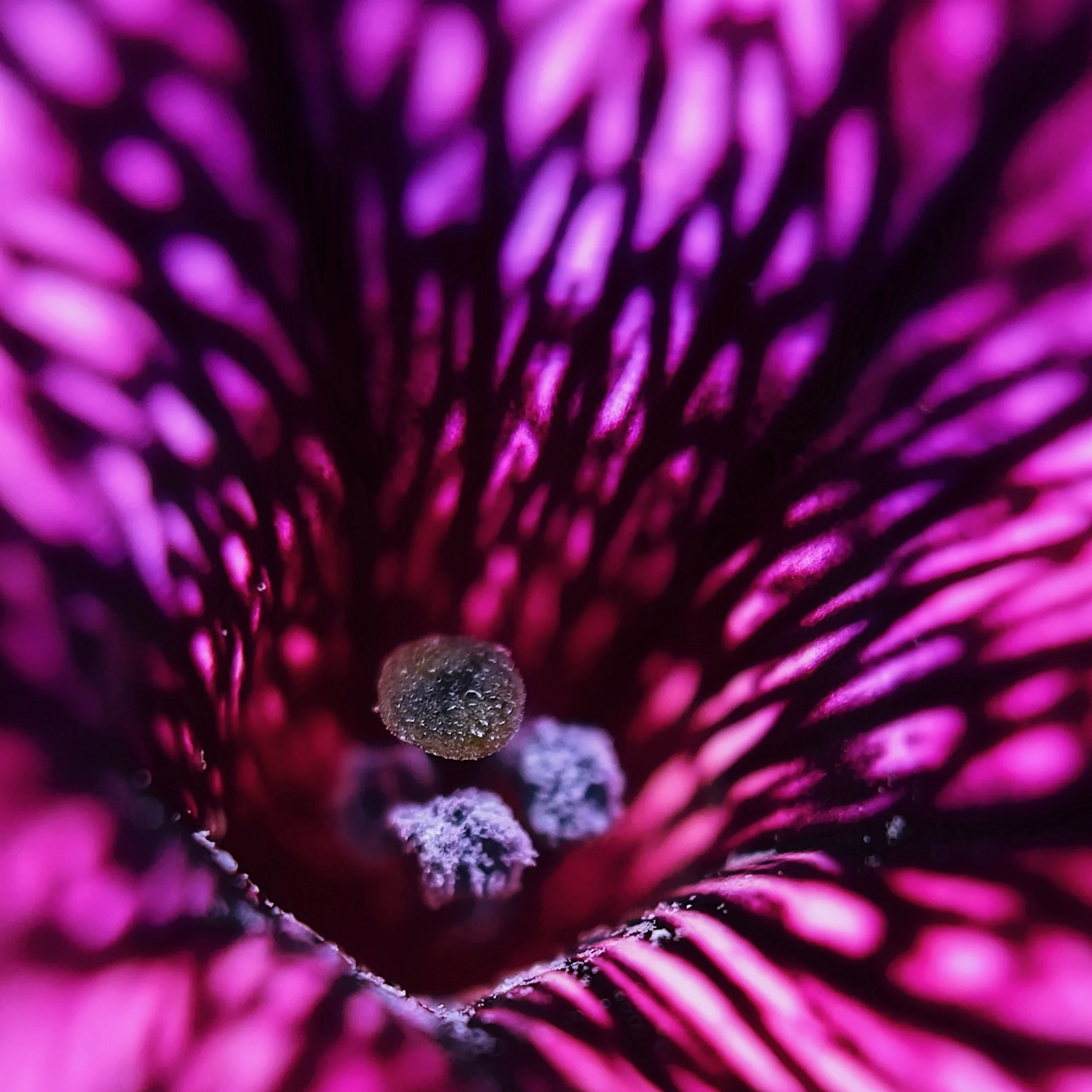
the centre of a petunia flower - Image by Michele Walker
I have been watching my garden come to life. So much is growing. I love seeing who is pushing up through the soil and who is opening blossoms for the world to marvel at. Pollinators move from flower to flower, exploring the first forage of dandelions, violets, catmint, and chickweed. Hands dig into the soil and find grubs and worms, roots and rocks. Knees press into the earth while tending, thinning, watering, and listening.
None of this is unexpected. These are all parts of spring that return each year. What feels different is the relationship forming with the wildness of this season and the growing understanding of what it means to be in intimate relationship with the earth and the more-than-human beings surrounding this life. Gardening has slowly shifted from task to practice, from growing plants to tending relationship.
Intimate comes from the Latin intimus, meaning “inmost,” and intimare, meaning “to make familiar” or “impress upon.” Many of those who make themselves known in spring feel familiar now. The return of violets, the unfolding of peony shoots, the hum of bees moving heavily through blossoms — all have made an impression over years of witnessing. But inmost touches something deeper.
Intimacy is often thought of as the willingness to be vulnerable with another: sharing deep emotions, revealing hidden parts of self, risking belonging in order to live in alignment with who one is becoming. These are the tender inmost places that are often protected carefully, revealed slowly and only in spaces that feel safe enough to hold them.
Spring seems to dissolve much of that caution. Seedlings push through the soil small and exposed. Blossoms open their innermost parts to the world because vulnerability is necessary for pollination and seed-making. Pollinators know these plants intimately, moving directly toward what is inmost. Worms and grubs live at the mercy of the shovel and sun. Roots dry out once exposed. So much of spring is built on vulnerability, on opening fully to the world.
And yet each year spring returns and this dance continues. Vulnerability moves life toward growth. Opening is necessary for transformation.
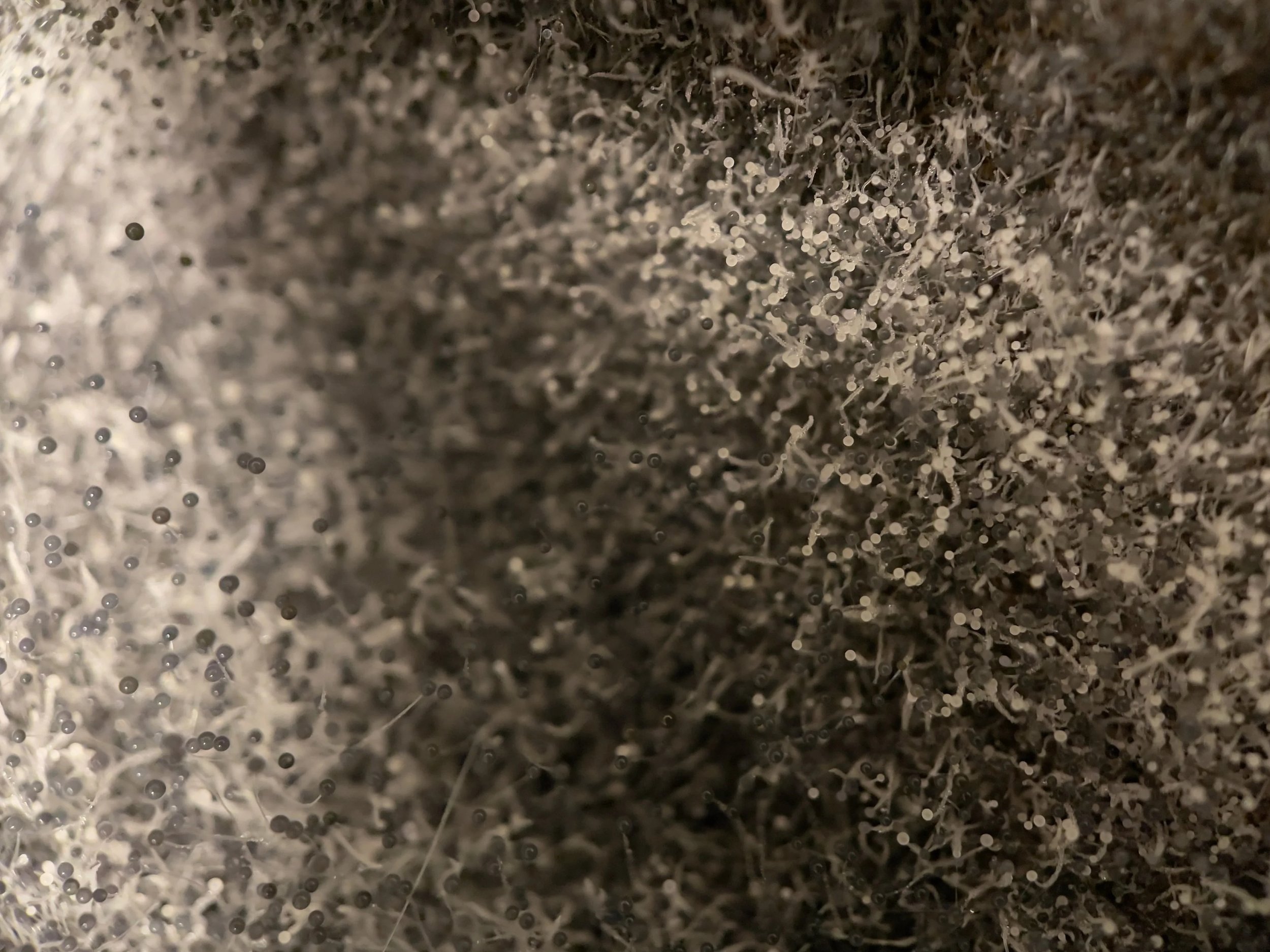
For years now, a macro lens has offered a way to look intimately at the world — the shining center of a flower, pollen gathered on a bee’s legs, the unexpected beauty of mold spreading across decay. These close observations created a kind of visual intimacy, a way of seeing the inmost details often missed. But this spring brought the realization that intimacy is not only about seeing closely. Intimacy is also about tending.
Beauty in Decay:
an intimate look at mold
Image by Michele Walker
There is something deeply spiritual about placing hands into the soil day after day, about learning the timing and needs of different plants, about noticing who arrives when the weather shifts. Tending a garden asks for presence, reciprocity, patience, and trust. My expanding spiritual practices have brought, conversations with seedlings and offering blessings for growth while watering. The garden is not simply being observed; I am stepping into a deepening relationship.
Perhaps this is what intimacy with the earth really is — not just witnessing beauty, but allowing relationship to change the way life is lived.
A Wander: The Intimacy of Small Things
Bring a phone or camera and move slowly through a garden, patch of weeds, forest edge, roadside, or any place where life is quietly unfolding. The invitation is not to search for beauty, but to notice what usually goes unseen.
Pause often. Kneel down. Get close.
Notice the places where life is vulnerable:
a seedling pushing through cracked soil
petals already browning at the edges
pollen dusting the legs of a bee
a torn leaf still reaching toward the sun
roots exposed after rain
mold softening what is decaying
Use your camera to take close-up photographs — not for perfection, but for intimacy. Allow the camera to become a way of entering relationship with what is small, hidden, delicate, or easily overlooked.
As each image is taken, pause and ask:
What becomes visible when slowing down?
What feels tender or exposed here?
What allows this being to keep opening despite vulnerability?
Where is vulnerability present in personal life right now?
What might become possible through softening, opening, or being seen more fully?
After the wander, spend time sitting with one photo that feels especially alive or meaningful. Notice what continues to pull attention back. Journal about why that image matters and what it may be reflecting back about intimacy, visibility, or growth.
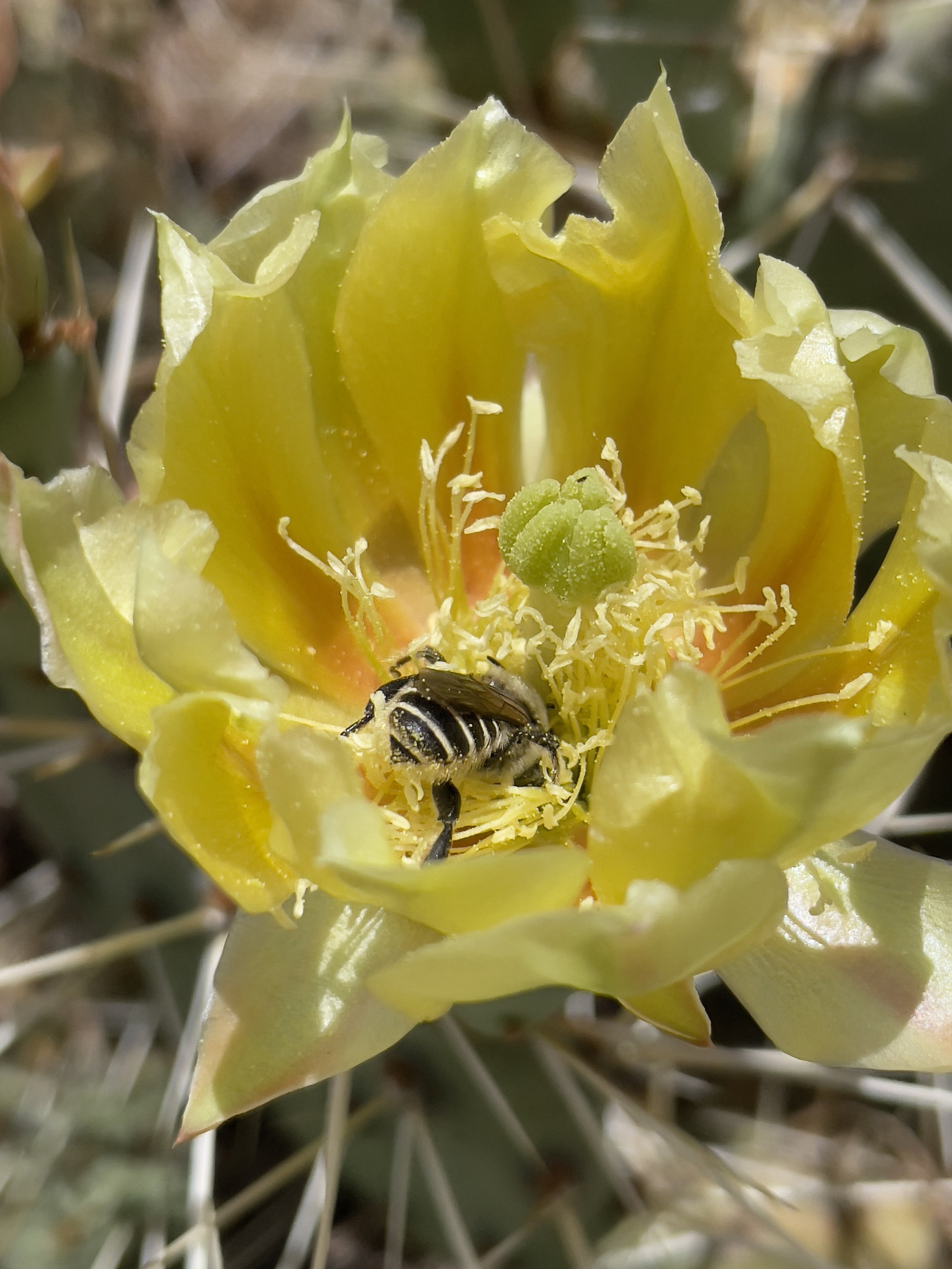
Finding Softness: Bee and Cactus Image by Michele Walker